

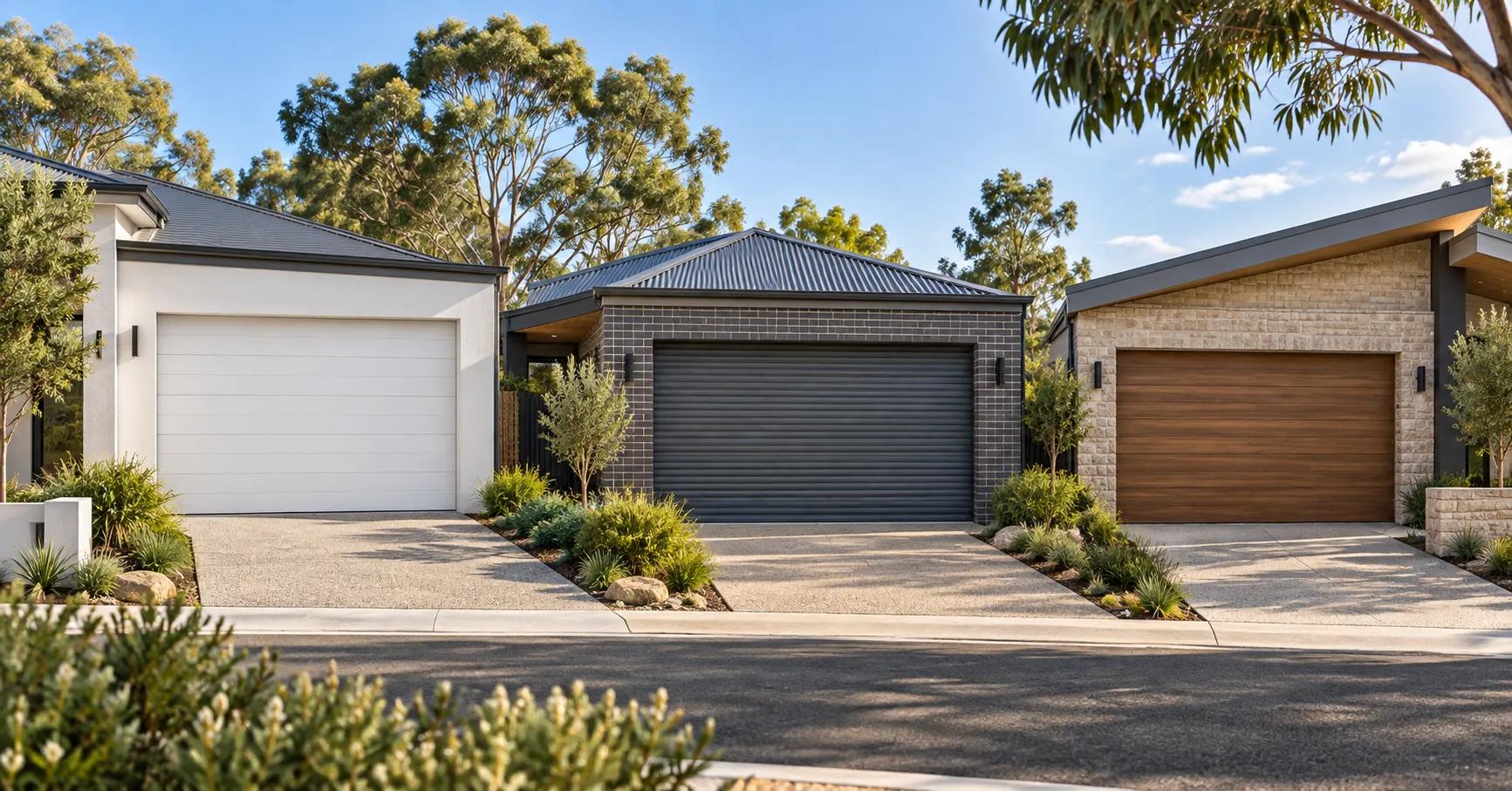
Garage door
Most people choose a garage door the way they choose a hot water system. Something breaks, a tradesperson recommends a replacement, and the decision is made in about four minutes.
That is not unreasonable. It is also how people end up with a door that does not suit their opening, a motor that is underpowered for the curtain it is lifting, or a brand whose parts are difficult to source three years later when something needs replacing.
The Australian market has a reasonably small number of significant names, and they occupy genuinely different positions. Here is what they actually make.
Australian door manufacturers
B&D is the most recognised name in Australian garage doors and has been for decades. The Roll-A-Door is close to a generic term in this country, which is a fair indication of market penetration. B&D manufactures both doors and openers, which means a fully matched system from one supplier and a well-established parts and service network nationally.
For most residential and light commercial applications, B&D is the safe default. The trade-off is that the recognition carries a price premium relative to some competitors making comparable product.
Gliderol is an Australian manufacturer with a long presence in the market, producing roller doors, sectional doors and openers. Gliderol built its position on straightforward, well-made roller doors and remains a strong option where value matters and the application is not unusual. Parts availability is good and the product is widely serviced.
Steel-Line is another Australian manufacturer with a broad range covering roller, sectional and tilt doors across residential and commercial. Steel-Line has a reputation for a wide colour and profile range, which matters more than it sounds if you are trying to match a door to a specific Colorbond palette on a newer home or a considered commercial facade.
Centurion manufactures garage doors and shutters with a range spanning residential through to commercial applications. It sits in a similar band to Steel-Line and Gliderol, competing on product range and value rather than on brand recognition.
Taurean produces roller doors and roller shutters with a particular presence in commercial and industrial applications. If you are specifying for a warehouse, a factory or a hard-working shed rather than a suburban garage, Taurean appears in that conversation more often than in the residential one.
Danmar manufactures garage doors with a focus on sectional and custom applications, and tends to come up where the requirement is less standard, whether that is an unusual opening size, a specific panel profile or a finish that the volume manufacturers do not offer.
Opener and motor manufacturers
This is where the decision gets more consequential, because the motor is the component most likely to need attention during the door's life.
Merlin is the dominant residential opener brand in Australia and the one most people will encounter. Merlin makes openers for sectional, tilt and roller doors, along with gate openers, and the range spans basic units through to models with smartphone control and battery backup.
The practical advantages are availability and familiarity. Almost any door technician in Australia has worked on Merlin units, parts are easy to source, and remotes and accessories are readily available. If you want a residential opener that any tradesperson can service in ten years' time, this is the low-risk choice.
Grifco occupies a different position entirely. Grifco makes commercial and industrial door operators, and it is the name you find on warehouse doors, loading bays and heavy commercial installations rather than on suburban garages.
The difference is duty rating. A residential opener is designed for a handful of cycles a day. A commercial operator is built for continuous duty, with heavier gearing, better thermal management and the electrical robustness to run all day without overheating. Putting a residential opener on a door that cycles sixty times a day is one of the most common causes of premature motor failure, and it is a false economy every time.
What actually determines your choice
Brand matters less than most buyers assume. Three other things matter more.
Duty cycle. How many times a day does the door open? This determines motor selection more than anything else, and it is the specification most often ignored. If your usage has changed since the door was installed, because the business grew or the garage became the main entry to the house, the original motor may now be undersized.
Door weight and size. The motor has to move the curtain, and the spring counterbalance has to do most of the work. An underpowered motor on a heavy door strains, overheats and fails early, and it also loads the spring system harder than intended.
Parts availability. A brand with a strong local service network means a same-day repair. A brand with limited presence means ordering parts, which turns a three-hour repair into a three-day one. For a business, that difference is the entire cost of the failure.
The practical implication is that the best brand is frequently the one your local installer stocks and services, because availability at the point of failure is worth more than a marginal specification advantage on paper.
Installers carrying multiple garage door brands in Australia are generally better positioned to answer this honestly than single-brand dealers, because they have no commercial reason to steer you toward a particular manufacturer and can match the brand to the application instead.
Residential versus commercial systems
It is worth being clear about this because the price difference is significant and the temptation to cross the line is real.
A residential door and operator are designed for low cycle counts, moderate wind exposure and a domestic environment. A commercial system is designed for high cycle counts, heavier curtains, larger openings and, frequently, harsher site conditions.
Fitting residential gear to a commercial opening produces predictable results: early motor failure, spring fatigue, and a door that was cheaper to buy and considerably more expensive to own.
The reverse, fitting commercial gear to a residential opening, is not wrong but is usually unnecessary spending, unless the door is unusually large or the household genuinely does cycle it many times a day.
If you are somewhere in between, and a lot of home businesses, workshops and hobby sheds are, the honest answer is to count your cycles for a week and specify from the real number.
Safety compliance
AS/NZS 60335.2.95:2024 governs the electrical safety of automatic garage door openers in Australia. The provisions that matter to a buyer are a maximum closing force of 400 newtons measured at the bottom of the door, mandatory photoelectric beam protection where closing force exceeds that threshold, and mandatory auto-reverse on compliant automatic openers.
AS/NZS 4505:2012, amended 2015 and reconfirmed 2017, covers the design, construction and installation of garage doors and other large access doors for openings up to three metres high, including wind pressure and wind-borne debris impact classification.
Two practical takeaways. First, if you have an older opener without auto-reverse and beam protection, that is a genuine safety issue and worth addressing regardless of whether the door works. Second, wind rating is a site-specific matter derived from AS/NZS 1170.2, not a product feature, and in high wind or cyclonic areas it is the specification that matters most.
What to ask before you buy
What is the duty cycle rating of the motor, and what is my actual daily cycle count?
Is the wind rating appropriate for my site, and can you provide the certification?
Are parts for this brand held locally, and what is the typical turnaround for a common failure?
What is the warranty on the door, on the motor, and on the installation, and are they the same?
Does the opener include auto-reverse and beam protection?
What is the recommended service interval for my cycle count?
That last question separates suppliers who understand the product from suppliers who sell it. Any answer that does not reference how often the door is used is not really an answer.
Door types explained
Choosing a manufacturer matters less than choosing the right type of door for the opening, and most of the brands above make several.
Roller doors wind onto a barrel above the opening. They need headroom for the coil but almost no space inside the building, which makes them the default where the area behind the door is used. They are robust, tolerate impact reasonably well, and are the cheapest option in most sizes. They seal and insulate less well than the alternatives.
Sectional doors are made of hinged panels that track horizontally under the ceiling. They need little headroom but significant depth into the building. They seal and insulate considerably better, run more quietly, and can incorporate glazed panels. They cost more and the panels are more expensive to repair after impact.
Tilt doors are a single rigid panel that pivots outward and up. They need clear space outside the opening for the swing, which rules them out on a short driveway. They are simple, durable and inexpensive, and they are the traditional Australian garage door for good reason.
Roller shutters are a heavier-gauge variation used for security applications and commercial shopfronts rather than vehicle access.
The type decision is driven by geometry: headroom, internal depth, and external clearance. Work out which types your opening physically permits before comparing brands, because it will often narrow the field to one.
What the price difference buys
Quotes for the same nominal door can vary substantially, and the difference is usually in four places rather than in the brand badge.
Steel gauge. A heavier curtain costs more, lasts longer and tolerates impact better. This is the most common place a cheap quote is cheap.
Motor duty rating. Covered above, and the most consequential single line in any quote.
Coating specification. Standard finishes near the coast fail early. Upgraded coatings cost more and are not optional in aggressive environments.
Installation quality and what it includes. Removal and disposal of the old door, making good, correct spring tensioning, safety testing and a written guarantee are all things a low quote may have excluded rather than discounted.
Compare quotes on those four items rather than on the headline figure, and the apparent price gaps usually explain themselves.
Installation matters more than brand
A well-made door fitted badly will underperform a mid-range door fitted properly, every time. That is not a marketing line, it is a consequence of how these systems work.
The spring must be tensioned correctly for the actual curtain weight, because incorrect balance is the leading cause of premature motor failure. The guides must be plumb and parallel, because a curtain running slightly out of true binds and wears. The fixings must suit the substrate and the calculated wind load. The limits and closing force must be set and verified rather than approximated. The safety reversal and beam protection must be tested, not assumed.
None of this is visible in a finished installation. All of it determines how long the door lasts.
Summary
The Australian market is well served. B&D, Gliderol, Steel-Line, Centurion, Taurean and Danmar all make competent doors, and the differences between them at the residential level are smaller than the marketing suggests. Merlin dominates residential openers, Grifco dominates commercial operators, and the distinction between those two categories is the one most worth getting right.
Choose on duty cycle, door weight and local parts availability rather than on brand reputation. Installers who supply and service across the range, including Perth-based specialists such as Glide Roller Doors, will typically recommend based on cycle count and site conditions rather than on which brand carries the best margin, and that is the conversation you want to be having.